ДПК vs SPC Напольное покрытие: Which Is Better for Your Home? Complete 2026 Comparison Guide
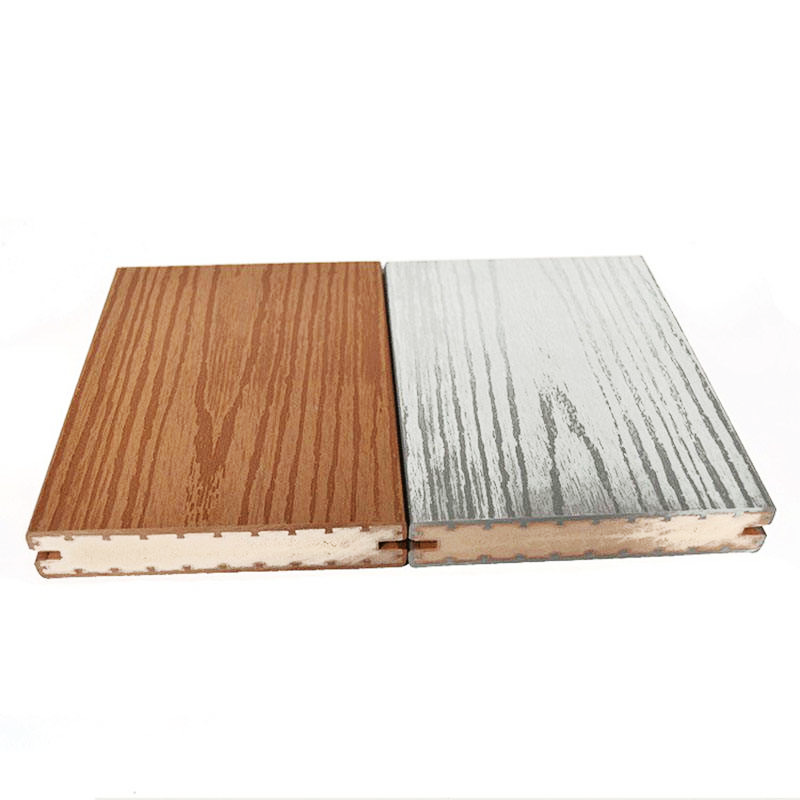
<p>You're standing in a Напольное покрытие showroom — or scrolling through suppliers online — and two acronyms keep appearing: ДПК and SPC. They both claim to be Водонепроницаемый, durable, and modern. They both look great in photos. But when it comes to your actual project — a sunlit living room with underfloor heating, a busy hotel corridor, or a rental apartment that needs to survive tenants — the differences between ДПК and SPC become critically important.</p><p>After 37 years of manufacturing composite Напольное покрытие, we've helped thousands of project owners, contractors, and architects make this exact decision. Here's everything you need to know.</p><p>The Core Difference: Wood vs Stone (Literally)</p><p>The names tell the whole story. ДПК stands for Wood-Plastic Composite — its core is made from wood fiber (30–60%) blended with thermoplastic polymer. SPC stands for Stone-Plastic Composite — its core uses limestone powder (calcium carbonate, 60–70%) mixed with ПВХ resin.</p><p>Wood gives ДПК its warmth, cushioning, and natural thermal properties. Stone gives SPC its rigidity, thinness, and dimensional stability. These fundamental differences ripple through every performance metric.</p><p>10 Dimensions Compared: Head-to-Head Data</p><p>Parameter ДПК Напольное покрытие SPC Напольное покрытие</p><p>Core Density 1.0–1.2 g/cm³ 1.8–2.0 g/cm³</p><p>Thickness Range 5.5–8mm 3.5–6mm</p><p>Weight 8–10 kg/㎡ 10–12 kg/㎡</p><p>Underfoot Comfort Warmer, softer, more cushion Harder, cooler, less give</p><p>Sound Insulation (IIC) 60–68 dB (no underlayment) 55–63 dB (no underlayment)</p><p>Thermal Conductivity 0.15–0.25 W/(m·K) 0.30–0.40 W/(m·K)</p><p>Water Absorption ≤0.5% (24h) ≤0.3% (24h)</p><p>Dimensional Expansion 0.5–1.0% 0.2–0.5%</p><p>Subfloor Tolerance Up to 5mm/3m deviation ±3mm/3m required</p><p>Price (FOB, same wear layer) $15–35/㎡ $12–28/㎡</p><p>Comfort & Underfoot Feel: Where ДПК Clearly Wins</p><p>If you've ever walked barefoot on SPC Напольное покрытие, you'll notice it feels cool and hard — similar to tile. That's because the limestone core conducts heat away from your feet. ДПК, with its foamed wood-plastic core, feels noticeably warmer and softer underfoot.</p><p>This matters more than you might think. In bedrooms, living rooms, and any space where people walk barefoot, ДПК's natural warmth creates a more comfortable daily experience. For projects with underfloor heating, ДПК is the clear winner: its lower thermal conductivity (0.15 vs 0.30–0.40 W/m·K) means better heat retention, while SPC heats up faster but also loses heat faster.</p><p>For spaces where underfoot comfort is not a priority — Коммерческий corridors, retail floors, or areas where thin profiles are essential — SPC performs adequately.</p><p>Водонепроницаемый Performance: Both Excellent, With Nuances</p><p>Both ДПК and SPC are "100% Водонепроницаемый" in their core composition. Neither dissolves in water, and both can handle spills, mopping, and humidity without damage.</p><p>The subtle difference lies in edge behavior. If water penetrates the click-lock joint and sits trapped for 48+ hours, ДПК's foamed core is slightly more susceptible to edge swelling than SPC's denser limestone core. In practice, proper installation with sealed joints eliminates this concern for both types.</p><p>Bottom line: For bathrooms, kitchens, and laundry rooms, both perform excellently. For areas with chronic standing water risk (basements, ground-level Коммерческий), SPC has a marginal edge.</p><p>Sound & Acoustic Performance: A Real Differentiator</p><p>This is where ДПК delivers tangible value that spec sheets often understate. ДПК's foamed core acts as a natural sound absorber, achieving IIC ratings of 60–68 dB without additional underlayment. SPC's denser core reflects more sound, typically achieving only 55–63 dB — and most SPC products require an attached cork or IXPE underlayment to close this gap.</p><p>For multi-story Жилой buildings, apartments, hotels, and offices, ДПК often meets acoustic code requirements without extra cost. This can save $1–3/㎡ in underlayment material and labor — partially offsetting ДПК's higher base price.</p><p>Durability: The Wear Layer Is What Matters</p><p>Surface durability — scratch resistance, stain resistance, wear lifespan — is determined by the wear layer, not the core. Both ДПК and SPC use identical wear layer options:</p><p>0.3mm — light Жилой</p><p>0.5mm — general Жилой / light Коммерческий</p><p>0.7mm — heavy Коммерческий</p><p>With the same wear layer, surface performance is identical. The core difference shows in indentation resistance: SPC's denser core resists furniture leg dents better, while ДПК's foamed core can show point-load marks over time (easily prevented with furniture pads).</p><p>Expected lifespan with proper maintenance: ДПК 15–25 years Жилой, SPC 15–20 years Жилой / 10–15 years Коммерческий.</p><p>Installation: Similar Systems, Different Subfloor Requirements</p><p>Both use Valinge/Unilin click-lock systems with comparable installation speed. The key practical difference:</p><p>ДПК: Thicker, more flexible boards tolerate minor subfloor imperfections (up to 5mm deviation over 3m). Ideal for renovation projects where perfect leveling isn't practical.</p><p>SPC: Thinner, rigid boards demand flatter subfloors (±3mm over 3m). Any deviation risks joint stress and audible clicking.</p><p>SPC is more commonly available in glue-down format (3–4mm) for Коммерческий projects requiring flush transitions. ДПК glue-down exists but is less common.</p><p>Best Applications: Decision Framework</p><p>Your Priority Choose</p><p>Comfort & warmth underfoot ДПК</p><p>Underfloor heating efficiency ДПК</p><p>Acoustic performance (apartments, hotels) ДПК</p><p>Uneven subfloor (renovation projects) ДПК</p><p>Thinnest possible Профиль SPC</p><p>Lowest cost SPC</p><p>Maximum dimensional stability SPC</p><p>Heavy Коммерческий point loads SPC</p><p>The 2026 Trend: Hybrid Cores Are Closing the Gap</p><p>The ДПК vs SPC debate is evolving. Manufacturers are developing hybrid cores that combine wood fiber's comfort with limestone's stability. Meanwhile, SPC is getting thicker (new 6–8mm products with attached underlayment) and ДПК is getting thinner (advanced foaming produces 4–5mm boards with improved density). Expect these trends to blur the traditional distinctions further over the next 2–3 years.</p><p>Final Verdict</p><p>There is no universal "better" — only the right tool for the job.</p><p>For most Жилой projects in 2026, ДПК Напольное покрытие offers a superior balance of comfort, acoustics, and installation flexibility — especially for projects with underfloor heating or acoustic requirements. For budget-sensitive Коммерческий work requiring thin profiles and maximum stability, SPC remains the practical choice.</p><p>At AORAI Tech, we manufacture both ДПК and SPC Напольное покрытие with 37 years of composite expertise. Our product lines include indoor ДПК Напольное покрытие, outdoor ДПК Террасная доска, SPC rigid core Напольное покрытие, and ДПК exterior Фасадная облицовка — all CE certified, FloorScore tested, and exported to 50+ countries. MOQ as low as 100㎡ with free samples shipped worldwide.</p><p>Need help choosing for your specific project? Contact our technical team for project-specific recommendations.</p>
Нужна консультация по WPC-материалам?
Наши специалисты помогут подобрать оптимальное решение для вашего проекта
Связаться с нами
